
Conflict in First Responder Relationships
If you’ve ever heard or said “I’m sorry, but…” you know how empty that apology feels. “Sorry” often gets tossed out as a quick fix to end the argument, not to heal the hurt. The problem is that those shallow apologies don’t repair anything. They pile up, leaving cracks in trust that get harder to ignore.
For many first responder couples, conflict starts to feel like a battle to win instead of a wound to heal. Law enforcement officers, in particular, are trained with a survival mindset: “you win, you go home.” But when that belief crosses into marriage, it turns your spouse into the opponent instead of your teammate.
That mindset often shows up as:
- A quick “sorry” just to stop the conversation.
- A sarcastic apology to brush it off.
- Deflection, like “I guess I’m just a terrible spouse.”
- Or complete shutdown and withdrawal.
And because shift work and long hours already limit time together, every unresolved conflict takes a bigger toll. Over time, those patterns don’t just create tension; they erode trust, the foundation of every resilient first responder relationship.
How to Apologize and Repair Conflict in First Responder Relationships
Apologies are supposed to repair hurt, but for many law enforcement and first responder couples, “sorry” either gets used too casually, thrown out sarcastically, or avoided altogether. Over time, those missed repairs chip away at trust, the foundation every marriage needs to thrive, especially in a career that already brings so much stress home.
In first responder culture, officers, firefighters, EMS, and dispatchers are trained to win, stay in control, and box up uncomfortable emotions. That works on the job, but at home, it can make vulnerability and repair feel impossible. Repair is a skill you can learn.
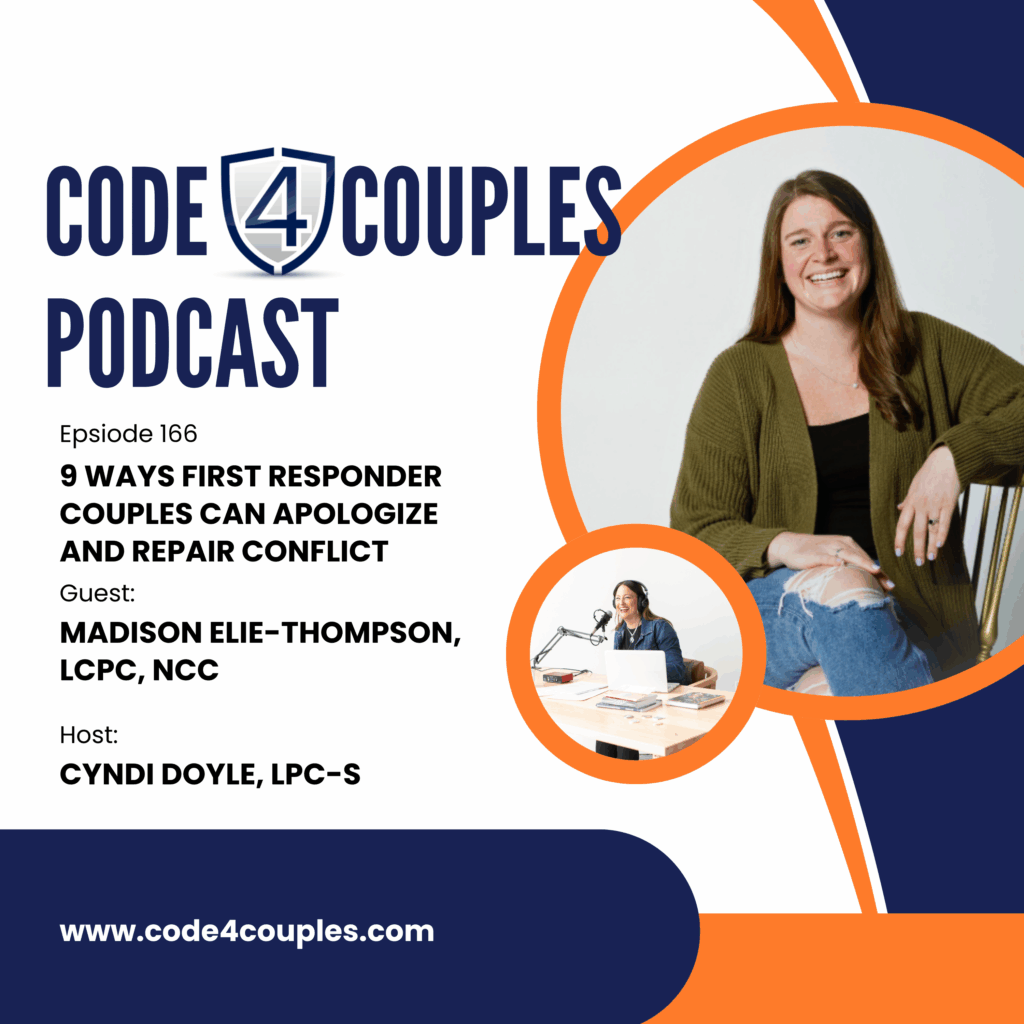
Madison Elie-Thompson discusses Psychologist Harriet Lerner’s nine ingredients of a genuine apology, and every one of them applies to first responder marriages. Here’s how they work:
1. Leave “but” out of your apology
If you say, “I’m sorry, but I was tired,” the word but erases everything before it. In first responder homes, it’s easy to explain away irritability after a long shift. But an explanation isn’t an apology. Instead, try: “I’m sorry I snapped when I came home. I know that hurt you.”
2. Own your actions, not your spouse’s feelings
“I’m sorry you’re upset” shifts the focus away from your behavior. Instead, take responsibility for what you did. Example: “I’m sorry I corrected you in front of the kids. That wasn’t fair.” In law enforcement culture, accountability matters on the street—it matters even more at home.
3. Offer to make it right
Apologies without action fall flat. If you borrowed your partner’s truck and left the gas tank on empty, fill it up. If you missed a family event, talk about how you’ll show up next time. First responders know actions carry weight, let your repair prove your words.
4. Don’t overdo it
Constant “sorry” waters down the word. Saying “sorry” for bumping into someone in the kitchen isn’t a repair, it’s avoidance. Use “thank you” or “excuse me” for the little stuff and save “I’m sorry” for moments that matter. Keeping apologies meaningful makes them count.
5. Don’t turn it into a blame game
Apologies aren’t competitions. In first responder culture, there’s plenty of rivalry and ribbing, but your relationship is a team sport. Even if your spouse played a role in the conflict, focus on owning your part. Example: “I raised my voice, and that was wrong. I’m sorry.”
6. Do your best not to repeat the behavior
Nothing destroys trust faster than apologizing for the same thing over and over. No one expects perfection, but consistency matters. If you’ve promised to be on time, don’t make the same excuse next week. Each follow-through rebuilds trust in small but powerful ways.
7. Don’t apologize just to end the conversation
Saying “I’m sorry” to shut down conflict leaves the emotional wound open and unresolved. First responders know how to compartmentalize, but silencing a partner creates more distance. Instead of rushing through, give yourself space if you need it: “I’m too worked up right now, but I want to come back to this. Let’s talk tonight.”
8. Don’t apologize just to feel better
If your goal is to get rid of guilt, the apology isn’t for your spouse. It’s for you. And that doesn’t heal. True repair respects boundaries. If your partner needs space, wait until they’re ready. Remember: the apology is about rebuilding connection, not easing your conscience.
9. Don’t expect forgiveness in return
Apologizing isn’t a bargaining chip. You may not get a “that’s okay” right away or at all. Your job is to own your part, not to control the outcome. In many first responder homes, control is part of survival, but in marriage, surrendering that control builds deeper trust.
Moving From Conflict to Connection in First Responder Culture Speaks
Conflict will happen. In fact, in first responder families, it may happen often because of stress, trauma, and constant schedule disruptions. The difference between couples who grow stronger and those who drift apart isn’t whether conflict occurs, but how they repair it.
Apologies rooted in accountability, vulnerability, and action can transform conflict from a wedge into an opportunity for connection. And when law enforcement couples and first responder families build trust this way, they reinforce the very resilience that helps them hold the line—together.
For more on emotional health and communication in law enforcement relationships, visit Code4Couples.com or check out Hold the Line: The Essential Guide to Protecting Your Law Enforcement Relationship.
To get in contact with Madison, please visit: [email protected] www.madisoneliecounseling.com
Grab your Apology worksheet here: 9 Ways to Apologize Worksheet