

What Law Enforcement Families Need to Know About Real Work-Life Balance
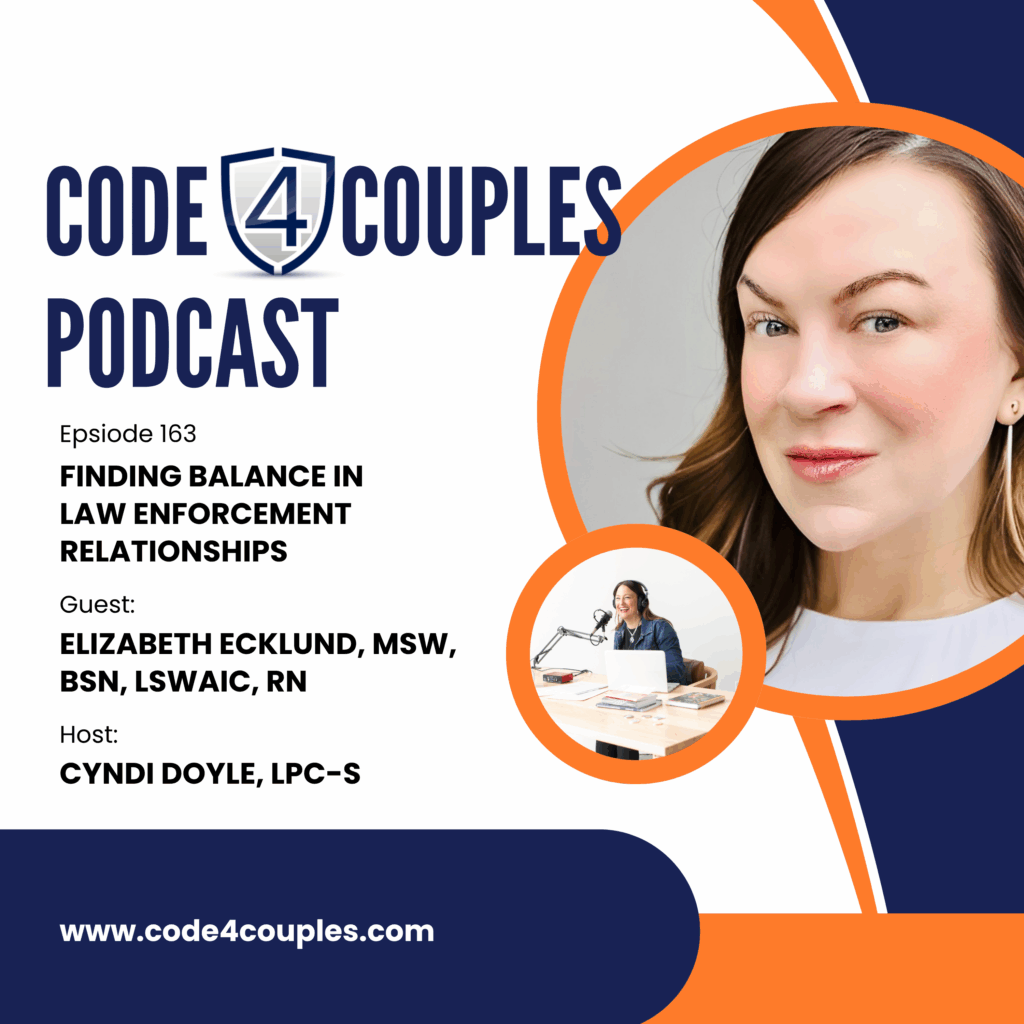
When we talk about balance in law enforcement life, it often sounds like a personal issue, something you’re expected to figure out quietly, in between overtime shifts and missed family dinners. The reality is balance isn’t just about time management or stress reduction. It’s about alignment between your job and your values, your needs and your partner’s, your role as a first responder and your role at home. And according to Elizabeth Ecklund, firefighter, nurse, social worker-in-training, and Antarctica-deployed badass, balance isn’t something you find. It’s something you build together.
Let’s break down what balance really means, why it matters in police marriages and first responder families, and how you can build it together.
First, What Is Balance?
In first responder culture, balance isn’t about taking bubble baths or downloading a meditation app. It is about survival, emotional, relational, and sometimes even physical. Balance means knowing who you are outside the uniform and making sure your personal life is not getting crushed under the weight of the job. Elizabeth shared that her tipping point came during the stress of COVID, when she realized her, professional life no longer aligned with her personal values. She sought therapy, got honest about what was working and what wasn’t, and came to terms with something, many first responders ignore for too long, she didn’t know what she actually needed.
That is where most people get stuck. You can’t communicate what you need if you haven’t taken time to figure it out. Balance starts with self-awareness, but it does not stop there. In law enforcement relationships, real balance is a system built through conversations, shared priorities, and mutual accountability. You cannot white-knuckle your way through burnout and expect your family to be fine and you cannot fix a disconnect at home by just showing up on your day off and calling it quality time.
That’s why Elizabeth frames balance as a shared project and something you create and protect together as a couple
Here are the three key reasons balance matters for law enforcement relationships and how to build it.
1. Law Enforcement Stress Mitigation and Burnout Prevention
First responder jobs are built for burnout. Long hours, trauma exposure, adrenaline addiction, it’s all there. Without clear boundaries and intentional downtime, you’ll burn out fast. That’s not just bad for your career, it’s brutal on your relationship.
Balance means knowing how you recharge. Elizabeth jokingly calls her Sundays “human vegetable days.” That’s her recovery zone, her buffer against depletion. Your version might look different, fishing, hiking, gaming, or just five hours of not making a single decision, but the point is this: Recovery is not optional.
And if you’re married? Your recovery can’t come at the expense of theirs. Balance means negotiating needs and not assuming your way works for everyone.
You’re not just preventing burnout, you’re protecting your ability to show up well for the job and for the people who love you.
2. Strengthening Law Enforcement Family Bonds
Most people think balance is about scheduling. It can be but for a couple or family, it looks different. It’s about communication.
Elizabeth emphasizes that knowing yourself isn’t enough. You have to communicate what you need and ask what your partner needs. You might think a monthly date night is plenty, but what if your spouse needs a weekly check-in, or help with bedtime routines, or one night without the phone ringing? Communication is key!
Balance in law enforcement relationships requires real conversations. Not just about time, but about values. Answer some of these questions as a couple:
What does connection look like?
How often do we need to talk, touch, or decompress?
What does support feel like to each of us?
Balance is not 50/50. It’s responsive. Some seasons require more compromise than others. If your department is short-staffed and your partner is solo parenting through night shifts, your balance will look different. The goal isn’t perfection. The goal is alignment and mutual care.
3. Enhanced Emotional Availability
Law enforcement culture isn’t known for emotional fluency. A research study showed that most of America can identify about three feelings. For law enforcement those three feelings might be: angry, tired, and “I’m fine.” Elizabeth points out that emotional availability is key to strong law enforcement marriages. If you don’t have the vocabulary or tools to express what’s happening internally, your partner stays shut out and resentment builds fast.
This is why therapy is important, especially with someone who understands first responder mental health. It’s not about fixing what’s broken, it’s about building skills most of us were never taught. Skills like naming emotions, making space for your partner’s stress, and knowing how to connect even when the job’s taken a toll.
Balance here means being emotionally present. It means knowing when you’re tapped out and communicating that with care. Not with silence, sarcasm, or shutdown.
Balance Is a Family System, Not a To-Do List
If you take one thing from Elizabeth’s perspective, let it be this: balance isn’t a spreadsheet. It’s a system you co-create. It requires vulnerability, support, real-time adjustments, and hard conversations.
In law enforcement relationships, your job will pull on your time, energy, and emotional bandwidth. If you don’t have a shared foundation and language around balance, the job will win, and the relationship will suffer.
So don’t do it alone. Define what balance looks like for both of you. Talk about it. Adjust it. Protect it.
And remember: your department won’t be there on your retirement day. But your family? They will, if you’ve nurtured those bonds all along the way.
For more on emotional health and communication in law enforcement relationships, visit Code4Couples.com or check out Hold the Line: The Essential Guide to Protecting Your Law Enforcement Relationship.